

The word Alaska is from the Aleut Indian word "alaxsxaq" or "agunalaksh"
that mean the mainland or shore. Alaska was originally purchased from
Russia 1867 for under 2 cents an acre. Secretary of State William Seward
arranged for its purchase from the Russians for $7,200,000. The transfer
of the territory took place on Oct. 18, 1867. Despite a price of about
two cents an acre, the purchase was widely ridiculed as “Seward's
Folly.” The first official census (1880) reported a total of 33,426
Alaskans, all but 430 being of aboriginal stock
At over 586,400 Square Miles, Alaska is twice the size of Texas. The
State of Alaska is 2,700 miles east to west and 1400 miles north to
south. Of the 20 highest peaks in the United States, 17 are in Alaska.
Mt. McKinley, the highest peak in North America, is 20,320 ft. above sea
level. Denali, the Indian name for the peak, means "The Great One."
Alaska boasts the northernmost (Point Barrow), the easternmost (Pochnoi
Point on Semisopochnoi Island in the Aleutians), and the westernmost (Amatignak
Island in the Aleutians) points in the United States."
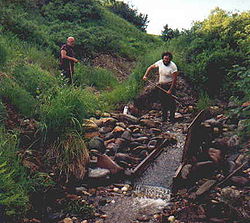
The search for gold played a major role in shaping the history of
Alaska, from the discovery of gold in Juneau to the great gold rush at
Nome. The Gold Rush of 1898 resulted in a mass influx of more than
30,000 people. Since then, Alaska has contributed billions of dollars'
worth of products to the U.S. economy. Gold was named the state mineral
in 1968.
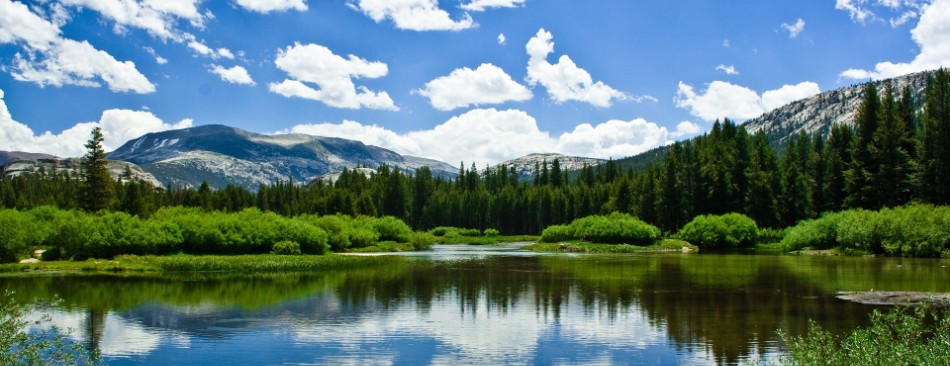
Alaska has 3 million lakes, over 3,000 rivers and more coastline than the entire continental United States. It is the only state
to have coastlines on three different seas; the Arctic Ocean, Pacific
Ocean and Bering Sea.
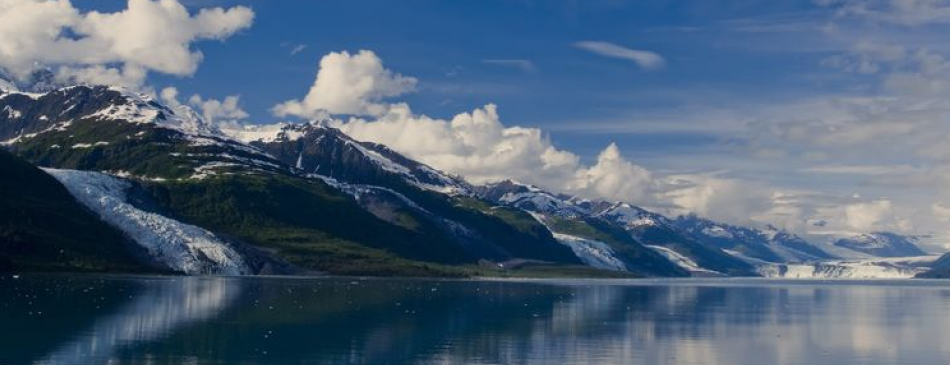
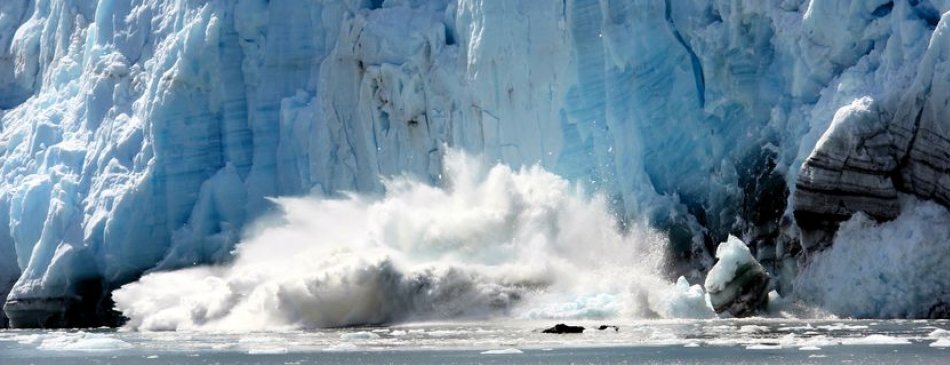
Alaska has an estimated 100,000 glaciers, which cover almost 5 percent
of the state. In fact over half of the world's glaciers are found
in Alaska, meaning there are more active glaciers in Alaska than in the
rest of the inhabited world. The largest glacier is the Malaspina at 850
square miles. Five percent of the state, or 29,000 square miles, is
covered by glaciers.
Alaska is also home to 80 percent of all the active volcanoes in the
U.S. There are more than 70 potentially active volcanoes in
Alaska.. Several have erupted in recent times. The most violent volcanic
eruption of the century took place in 1912 when Novarupta Volcano
erupted, creating the Valley of Ten Thousand Smokes which is now part of
Katmai National Park.
On March 27, 1964, North America’s strongest recorded earthquake, with a
moment magnitude of 9.2, rocked central Alaska. Each year Alaska has
approximately 5,000 earthquakes, including 1,000 that measure above 3.5
on the Richter scale. Of the ten strongest earthquakes ever recorded in
the world, three have occurred in Alaska.
The
design for the Alaska flag was selected in a contest for Alaska students
in grades seven through twelve in 1926. The winning design, submitted by
13-year-old Benny Benson, consisted of eight gold stars on a field of
blue, representing the Big Dipper and the North Star. The Alaska
Legislature adopted the design as the official flag for the Territory of
Alaska on May 2, 1927. Later the drafters of the Alaska constitution
stipulated that the territorial flag would become the official flag of
the State of Alaska.
State Nick Name: "The Last Frontier"
State Motto: "North to the Future" - Alaska's motto was chosen in 1967 during the Alaska
Purchase Centennial and was created by Juneau newsman Richard Peter. The motto
is meant to represent Alaska as a land of promise.
State Bird: The Alaska Willow Ptarmigan (Lagopus lagopus alascensis
Swarth) is the official bird of the state.
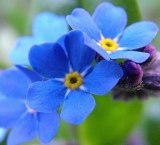
State Flower: The Territorial Legislature approved the forget-me-not as
the official floral emblem of the Alaska Territory and the Governor
signed the legislation into law on April 28, 1917.
State Fossil: Alaska's state fossil is the Wooly Mammoth. Woolly
mammoths are symbolic of the ice age because of their large size (about
10 feet high at the shoulders), broad circumpolar geographic
distribution, relative abundance during the last glaciation and
adaptation to cold environments.
State Fish: The king salmon (
Oncorhynchus tshawytscha) is the
official fish of the state.
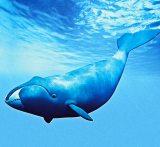
Sate Mammal: The state land mammal is the moose and the state marine
mammal is the bowhead whale. The state dog is the
Alaskan malamute.
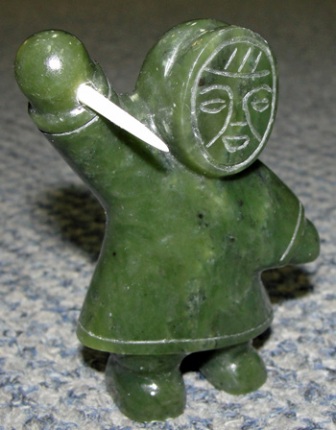
State Gem: The Alaska Legislature chose jade as the state gem in 1968.
When the original Alaskans found the nuggets of jade that tumbled
downstream in the Kobuk River, they used the gem to make tools, weapons,
and jewelry.