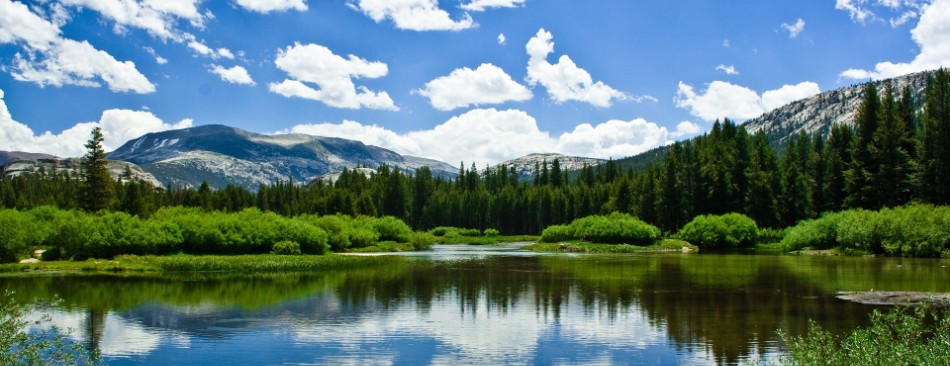
The Alaska Region occupies the rugged, mountainous coast of the northeast Pacific Ocean. The maze of fjords and islands, streams and mountains characterizing the Region support a wide array of vegetation types ranging from vast wetlands to luxuriant temperate rainforests to magnificent alpine ecosystems.
There are about 1,700 types of plants in the Alaskan Tundra. What most of them have in common are growth characteristics; they tend to grow low to the ground. The long day length that accompanies the short summer is a boon to plants, which are able to photosynthesize 24 hours a day in some places. This leads to rapid plant growth. Among the common types of tundra plants are willows, sedges and grasses, many in dwarf forms compared to their growth forms in warmer climes. Lichens and mosses are also important, particularly in the harshest climates.
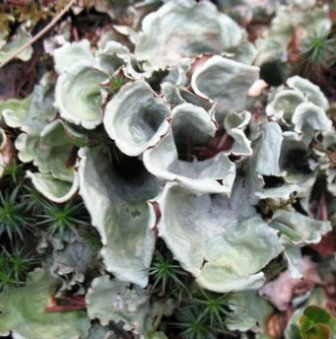
Lichens are specialized fungi that “farm” algae as a food source. Unlike molds, mildews, and mushrooms that parasitize or scavenge food from other organisms, the fungus of a lichen cultivates algae and / or blue-green bacteria (called cyanobacteria) within the fabric of interwoven fungal threads that form the body of the lichen. Lichens come in many shapes, sizes, and colors. A lichen thallus has one of three general growth forms: foliose, fructose, or crustose. Foliose lichens are leaf-like with different upper and lower surfaces. Fructose lichens are hair-like or bushy with no obvious difference between upper and lower surfaces. Crustose lichens are so closely attached to a surface, like paint spots, that the lower surface is not easily observable.
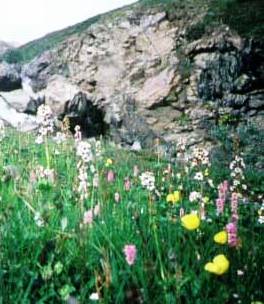
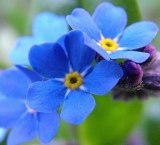
Many of the plants in the Alaska Region produce spectacular wildflowers and colorful foliage, providing excellent opportunities to enjoy native plants from spring through autumn. Many native Alaskan plant seeds require 4-6 months of cold stratification. This is most easily accomplished by sowing the seed into a moist growth medium such as Pro-Mix in the Fall, and leaving it outside or in a refrigerator. Do not let the seed dry out.
Blueberry plants are cold hardy and blueberries are a favorite native bush to grow in Alaska. Blueberry plants are native to Southern Alaska soils. During the Fall the leaves of the blueberry plant turn a brilliant scarlet color. Plum trees can be grown in Alaska, but some winters the plum tree is not as cold hardy as cherry trees or apple trees.
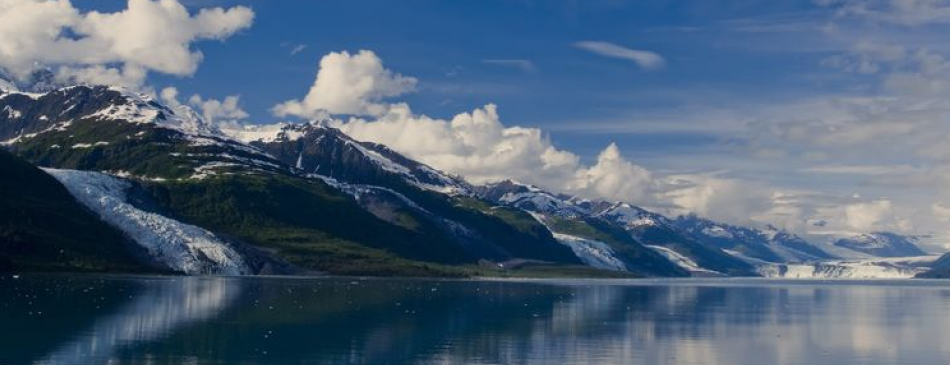
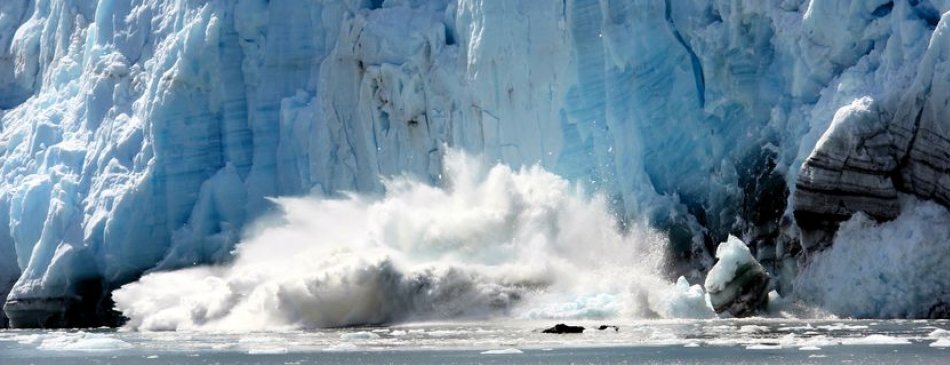
Glacier Bay is blanketed by a mosaic of plant life, from a few pioneer species in recently exposed areas to intricately balanced climax communities in coastal and alpine regions. Since virtually all the vegetation in the bay has returned to the land in the past 300 years following the retreat of the glaciers, this area is one of the premier sites on the planet to study plant recolonization.
A trip into Glacier Bay mimics glacial retreat and rolls back plant succession, from the mature forest at Bartlett Cove to the naked earth structure at the fjords' farthest reaches. Biological succession produces profound change here in a mere decade. Earnest, long-range studies of plant succession began in Glacier Bay in 1916, with the work of Professor William S. Cooper. His plant studies were continued in 1941 by Professor Donald Lawrence and others
Plant recovery may begin here with no more than "black crust", a mostly algal, felt like nap that stabilizes the silt and retains water. Moss will begin to add more conspicuous tufts. Next come scouring rush and fireweed, dryas, alder, willows, then spruce, and finally hemlock forest. (on the park's outer coast the final or climax stage of plant succession may be muskeg, because soil packing causes poor drainage.) Where plants' seeds happen to land, of course, can be critical. The chaotic rock-and-rubble aftermath of a glacial romp is deficient in nitrogen. Alder and dryas are important pioneers because they improve the soil by adding to it nitrogen from the air. Much of northern Europe and America were pioneered by dryas when the last Ice Age ended. Sitka alder eventually forms dense entanglements that are the bane of hikers. But these alders also fix nitrogen in their root nodules, and drop leaves that add valuable nitrogen to the soil. This enables spruce to take hold and eventually shade out the alder. A forest community is begun. Each successive plant community leading up to the climax community creates new conditions that lead to its replacement by plants more competitive under those new conditions. The theory holds that plant competition modifies the environment- light and moisture availability, and soil nutrients- so that plant populations also change. Over time, successive plant communities will occupy the environment, hence plant succession. The time from naked rock to revegetation is not necessarily long. A naturalist doing field studies here about 1920 collected bird specimens of willow ptarmigan so gorged on plump ripe strawberries that juice ran out of their mouths when they were held up by their legs.
|