Alaska has about 3,197 officially named natural lakes, out of over 3,000,000 unnamed natural lakes. 86,051 square miles of Alaska are covered by water. The largest, Lake Iliamna, encompasses over 1,000 square miles. Many of Alaska's lakes are only reachable by air or boat. Lakes that are easily accessible are used for recreation such as boating, fishing, and swimming.
Lake Iliamna is Alaska's largest lake, at nearly 100 miles long, 30 miles wide and it offers some of the best fishing in the state. The lake offers both salmon and trout fishing, as well as sightings of freshwater seals. Visitors to Iliamna will be very likely to see bear and other wildlife, and can explore the lake and surrounding areas via boat or on foot. The fishing lodges provide accommodations, food and assist guests in setting up tours and other outdoor adventures. Local residents have a number of stories about the alleged Iliamna Lake Monster, an aquatic creature much like the rumored Loch Ness Monster. Jeremy Wade of Animal Planet's "River Monsters" thinks the monster is actually a large White Sturgeon.
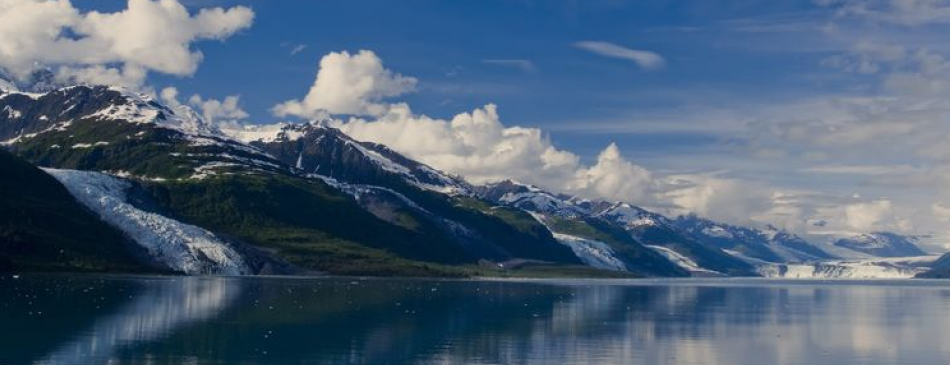
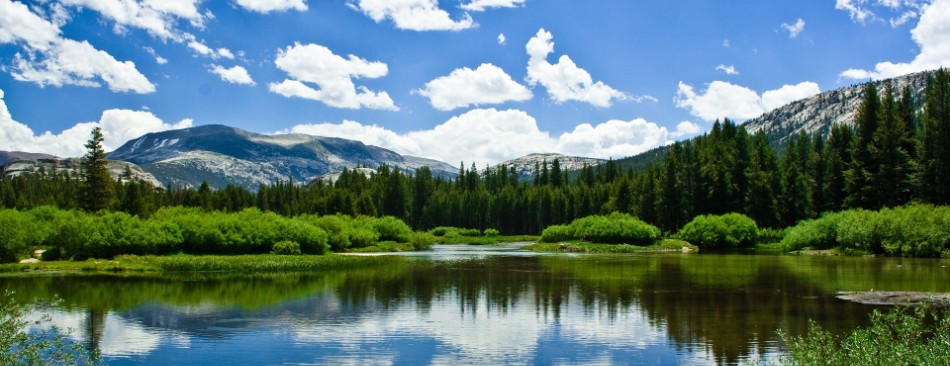
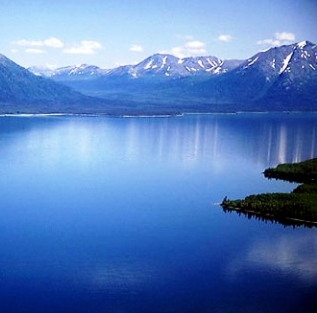
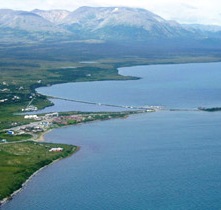
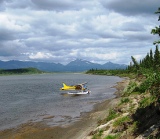
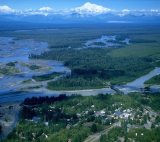
Located along the Parks Highway north of Willow, Kashwitna Lake is a popular stop for tour busses because of the view; on a clear day, the Alaska Range and Denali are visible in the background behind the lake, as shown in the first two pictures. Many small homes and cabins dot the northern shores of this lake, and for years Susitna Air Service was based on this lake.
The Trail Lakes system, composed of Upper Trail Lake and Lower Trail Lake, is a lake system located along the Seward Highway in the Kenai Mountains. Glacial silt and sediment have colored these lakes a dull bluish-grey color. The small community of Moose Pass is located on the shore of these lakes.
Tern Lake is not very deep, but its location makes it a frequently visited and photographed lake by tourists. It is located in a wide valley of the Kenai Mountains at the junction of the Seward and Sterling Highways. Salmon use this lake as a spawning area and a salmon viewing area gives visitors a good close-up view of the salmon as the swim upstream into the lake.
Kenai Lake isn't the largest lake on the Kenai Peninsula, but with its striking turquoise-colored water and surrounding mountains, it's certainly one of the most scenic. The Seward highway parallels the eastern shoreline and the Sterling Highway follows a portion of the northern shore, so there are plenty of places to view this lake from. Part of the small community of Cooper Landing is situated on the shores of this lake.
Lake Clark is a lake in southern Alaska. It drains through Six Mile Lake and the Newhalen River into Iliamna Lake. The lake is about 64 km (40 mi) long and about 8 km (5.0 mi) wide. Lake Clark was named for John W. Clark, chief of the Nushagak trading post in 1891 and the first American non-Native to see the lake. The Dena'ina Athabascan name is Qizjeh Vena which means "place where people gather lake" Lake Clark National Park and Preserve straddles the Alaska Range in between Denali and Katmai National Parks and Preserves. Its dynamic landscape boasts active volcanoes and earthquake fault lines, glaciers, 130 miles of coastline, 6,000 miles of rivers, and protects numerous large lakes, including the park’s namesake Lake Clark, the sixth largest lake in Alaska.
The Alaska Department of Fish and Game stocks most Anchorage area lakes at least twice a year to ensure good recreational fisheries. Stockings include Arctic Char, Rainbow Trout, Grayling and land locked King Salmon.
Wood River and Aleknagik Lake have been used historically as summer fish camps. Aleknagik means "Wrong Way Home," because Natives returning to their homes along the Nushagak River would sometimes become lost in the fog and find themselves swept up the Wood River with the tide, inadvertently arriving at Aleknagik Lake. Fog and low clouds are common during July and August and may preclude access. The lake and river are ice-free from June through mid-November.
Becharof Lake is a 37-mile (60 km) long lake on the Alaska Peninsula. It is located 23 miles (37 km) south-east of Egegik, in the Aleutian Range. Becharof Lake is the second largest lake in Alaska after Iliamna Lake, and the fourteenth largest lake in the United States of America. The lake was named in 1868 by naturalist W. H. Dall, USC&GS for Russian navigator Dmitry Bocharov, IRN, who was at Kodiak and explored Alaska in 1788 and 1791.
Lake Minchumina is situated near the geographical center of Alaska, 65 miles north-northwest of Mt. McKinley. Historically it has been central as a portage between the navigable waterways of the Yukon-Tanana and Kuskokwim Rivers. Its location was important as a midway point for sled trail mail transportation in the 1920s and 1930s, and for airplane transportation between Fairbanks and McGrath.
|