|
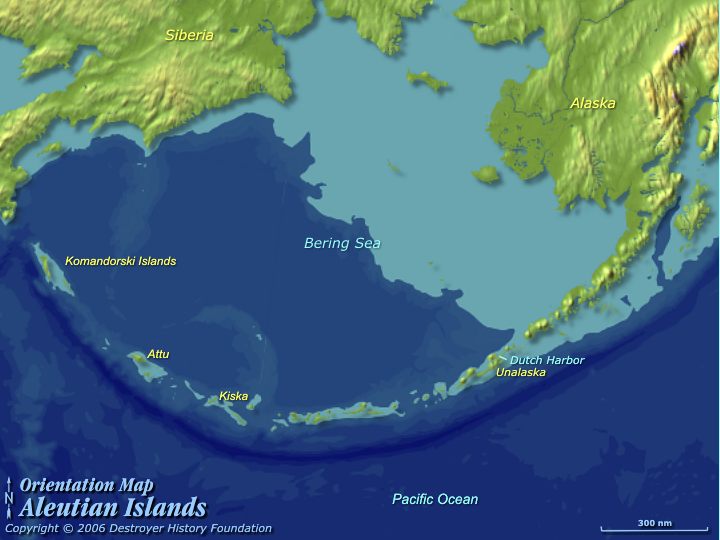
The Aleutian Islands are a series of over 300 rocky islands that stretch over 1,000 miles from southwest Alaska to Russia. The Aleutian islands are unique in that they are the westernmost place in the United States, and, because they cross the 180° parallel, they are technically also the easternmost. These islands and their surrounding waters are home to many seabirds, mammals, and fish.
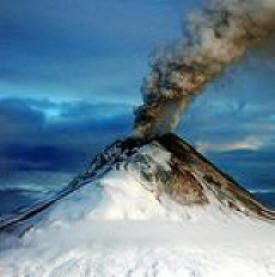
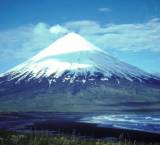
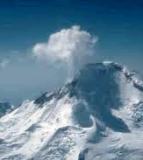
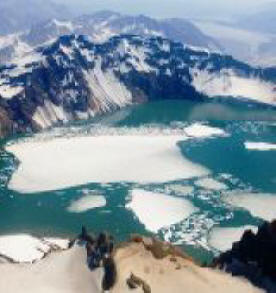
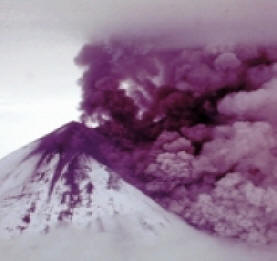
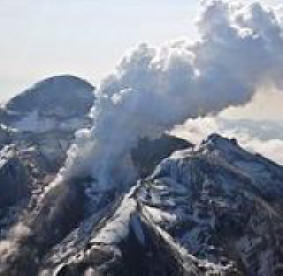
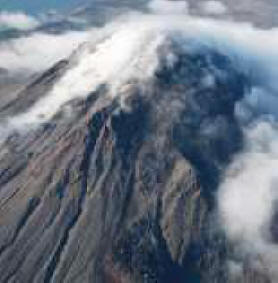
The Aleutian Islands are actually the peaks of 57 submarine volcanoes (27 of which are considered active) rising from near sea level to more than 9,000 feet.
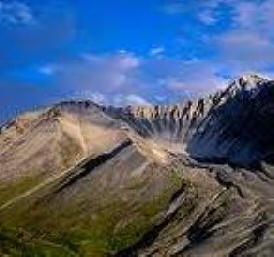
Extending southwest from the southern Alaska mainland and the Alaska Range, the Alaska Peninsula and the Aleutian Islands are supported by the Aleutian Mountain Range. The Aleutians include 14 large islands and about 55 small islands. The largest islands are Unimak, Unalaska, and Umnak. The Aleutian Range extends 1,600 mile, from Mount Spurr, across Cook Inlet from Anchorage, to Attu Island near the Asian continent and contains many active volcanoes. This range is home to the Valley of Ten Thousand Smokes, created when Novarupta erupted in 1912. The Valley of Ten Thousand Smokes was named for the numerous fumaroles in the area. Fumaroles are holes in the earth that release hot gas steam into the air.
In the Aleutians you'll find the foggiest, rainiest, windiest weather in the United States. Sea kayaking is popular but often dangerous due to violent storms and magnificently rocky shorelines. Many of the larger islands offer open country for backpacking including Attu, Agattu, Kiska, Semisopochnoi, Tanaga, Kanaga, Adak, Kagalaska, Great Sitkin, Atka, Amlia, and Seguam. Storm often arrives on the tail of storm, but visiting the islands, for the persistent, may well rate among the wilderness experiences of a lifetime. The mean annual temperature for Unalaska, the most populated island of the group, is about 38°F (3°C), being about 30°F (−1°C) in January and about 52 °F (11 °C) in August. The highest and lowest temperatures recorded on the islands are 78°F (26°C) and 5°F (−15°C) respectively. The average annual rainfall is about 80 inches (2,000 mm).
On most of these islands you'll find lush green tundra dotted with summer wildflowers and carpeted with grasses, sedges, mosses, lichens, and heath. Cool average temperatures prevent trees from establishing here. Marine mammals include the endangered Steller sea lion, threatened northern sea otter, and harbor seal. Most of the land mammals, including foxes, reindeer, and caribou, have been introduced by humans. The principal marine fish are halibut, cod, rockfish, sablefish, yellowfin sole, pollack, sand lance, herring, and salmon.
The Aleutians are home to many large colonies of seabirds, including Buldir Island, with 21 breeding seabird species, including the Bering Sea-endemic Red-legged Kittiwake. Large seabird colonies are also present at Kiska, Gareloi, Semisopochnoi, Bogoslof, and others. The islands are also frequented by vagrant Asiatic birds, including Common Rosefinch, Siberian Rubythroat, Bluethroat, Lanceolated Warbler, and the first North American record of Intermediate Egret
Because of the location of the islands, stretching like a broken bridge from Asia to America, many anthropologists believe they were a route of the first human occupants of the Americas. The earliest known evidence of human occupation in the Americas is much farther south; the early human sites in Alaska have probably been submerged by rising waters during the current interglacial period.
People living in the Aleutian Islands developed fine skills in hunting, fishing, and basketry. Hunters made their weapons and watercraft. The baskets are noted for being finely woven with carefully shredded stalks of beach rye. The Aleut people originally settled on these islands as early as 9,000 years ago. Living off a land poor in sunlight but rich in food, they built seacoast villages and gave Alaska its name: "the Great Land." At their peak population, they numbered somewhere between 15,000 and 25,000. After the Russians arrived in 1741, the Aleuts were decimated first by violent attacks and enslavement, and later by disease. By 1831 fewer than 1,000 Aleuts survived, and today their villages exist only on several of the islands.
Radioactivity is still present in the environment following the nuclear testing on Amchitka in 1971. Today almost all the Aleutians are protected as part of the Alaska Maritime National Wildlife Refuge and the Aleutian Islands Wilderness.
|