|
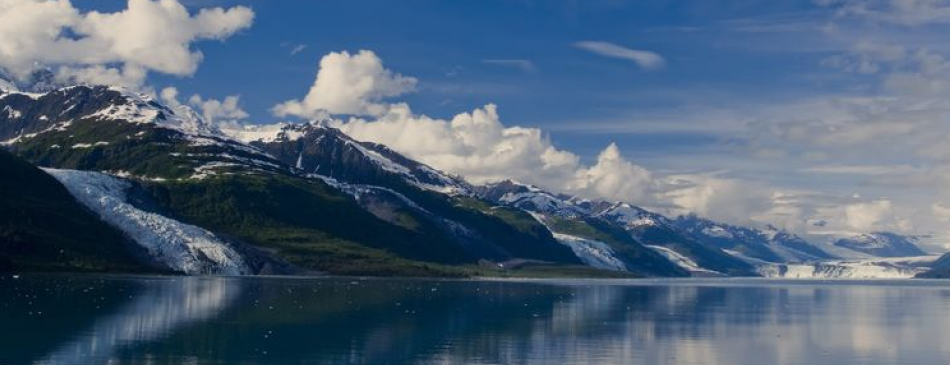
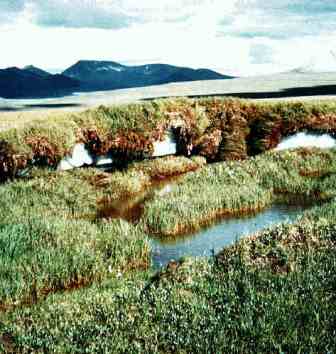
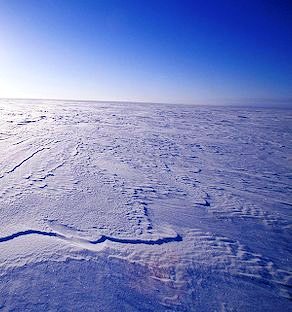
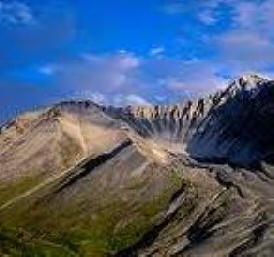
Alaska boasts the only arctic tundra within the United States. Tundra exists in Alaska's northern and western coasts. Alaskan tundra does not have any trees. It is also very windy and has dramatic seasonal changes, including drastic changes in daylight hours throughout the year. The Alaskan tundra boasts an average annual temperature colder than five degrees Fahrenheit
The tundra biome receives as little precipitation as some deserts. Average yearly precipitation, including snow melt, is just 6 to 10 inches, compared to 30 to 60 inches in the temperate deciduous forest biome. The summer is brief, with temperatures above freezing lasting for only a few weeks.
Tundra comes from a Finnish word, tunturi, which means "treeless heights". Despite the cold temperatures, many plants thrive in the Alaskan tundra. There are about 1,700 types of native plants living in this arctic biome. What most of them have in common are growth characteristics; they tend to grow low to the ground. The long day length that accompanies the short summer is a boon to plants, which are able to photosynthesize 24 hours a day in some places. This leads to rapid plant growth.
A surprising number of insects are able to endure the harsh winters (many as frost-resistant eggs); these also undergo rapid development in the summer. Among the common types of tundra plants are willows, sedges and grasses, many in dwarf forms compared to their growth forms in warmer climes.
Lichens and mosses are also important, particularly in the harshest climates. Lichens are composite organisms made up of both a fungus, which provides structure, and an algae, which synthesizes chlorophyll for food. One lichen commonly found in the Arctic tundra is caribou moss, also known as reindeer lichen. This drought-resistant organism appears on rocks as a spongy gray-green foam.
Labrador tea is a hardy bush native to the tundra's of Alaska, Canada and Greenland. Its narrow 1- to 3-inch leaves grow on woolly branches. In the summer, small clusters of white flowers appear. The vitamin C rich leaves of this plant have been used by indigenous peoples to brew a tea used to treat stomach, skin and nerve conditions.
The U.S. Forest Service ranks only one tundra plant as federally endangered, though three more have been assigned a global rating of G1, which indicates a plant is “critically endangered throughout its range” by The Nature Conservancy. The Alaska Department of Fish and Game credits geographical isolation, limited human impact, “and a little luck” with the state’s comparably short list of threatened species.
The ecology of the tundra is controlled by the cold climate and the northern latitude. A unique soil structure, permafrost, forms and dominates the biology. Permafrost is a layer of soil that remains frozen year-round. The soil above it may thaw during the summer, but the soil below remains frozen and thus biologically inactive. Further, the permafrost forms a barrier; in temperate climes many animals overwinter by burrowing down into the soil to a point below where the soil freezes. This is not possible in the tundra soils, and thus animals must contend with freezing over the winter. It is no accident that there are no reptiles or amphibians in the tundra.
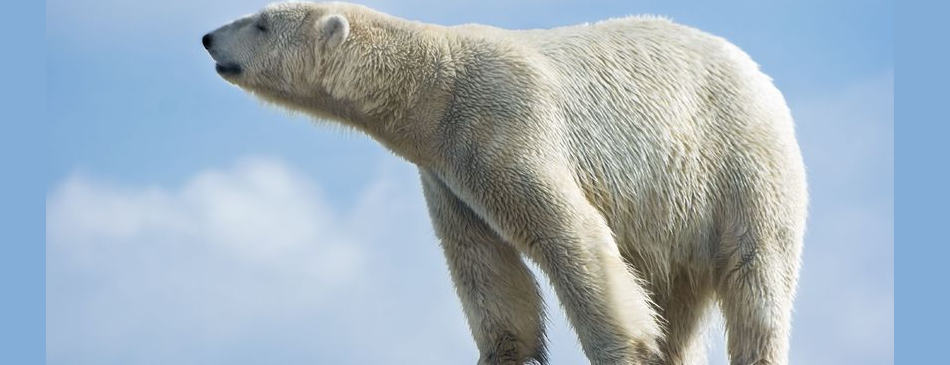
Animals have adapted to the Alaskan tundra by developing warm winter coats, compact bodies to preserve heat, and camouflage for different seasons. Some animals found on the Alaskan tundra include caribou, arctic fox, arctic hare, arctic ground squirrel, and arctic grizzly bear.
Many bird species migrate from southern areas to the tundra each year for the reduced competition and plentiful insect harvest; this rich diet enables them to rear their young in an otherwise bleak environment.
In the Alaskan arctic, fires may become more severe and frequent as the climate warms. The Anaktuvuk River fire burned more than 621 square miles of tundra on Alaska's North Slope in 2007. One possible reason for the increased intensity and frequency of the fires is that warmer temperatures increase the growth of shrubby plants, which then provide fuel for fires. When the weather is dry as well as warm, the tundra burns. The arctic is warming more rapidly than the rest of the planet. The year of the Anaktuvuk fire had the lowest precipitation and highest temperatures recorded, about 52 degrees Fahrenheit.
|