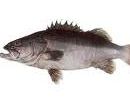
Alaska is home to more than 627 species of fish, according to the Alaska Division of Tourism, including a variety of salmon, trout, halibut, arctic char, pike, grayling and dolly varden.
Salmon
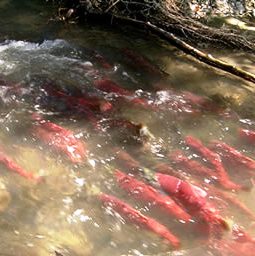
Salmon is the name of the game in Alaska. And nearly every river and stream on the Kenai Peninsula which is connected to the sea supports some or all of the salmon species found in Alaska.
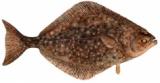
Halibut
The name "halibut" is derived from the Middle English "haly-butte," meaning the flatfish to be eaten on holy days. And Alaskans do revere the halibut. The halibut taken by anglers usually weigh 15 to 20 pounds (described as "chickens"), but 150-pounders are often caught. Like other bottom-dwelling flatfish, halibut have both eyes on "top." Actually, the left eye migrates to the right side in the first few months of the halibut's life.
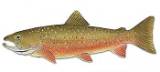
Trout
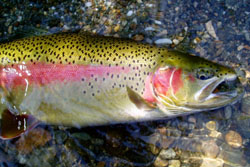
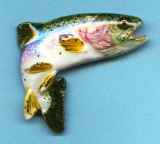
From kids catching 8-inch stocked fish to giddy grownups landing a 30-pounder on a remote stream, rainbow trout are a big part of Alaska's fishing culture. Rainbow trout, with their dark backs, reddish-pink side bands and black speckles, attract anglers from around the world, especially to southwestern Alaska.
Arctic Char
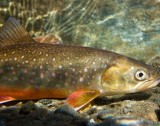
The arctic char is the most northerly distributed of char and char's closely related cousin, the Dolly Varden. In Alaska, arctic char are found in lakes in the Brooks Range, the Kigluaik Mountains, the Kuskokwim Mountains, the Alaska Peninsula, Kenai Peninsula, Kodiak Island and in a small area of Interior Alaska near Denali National Park.
Dolly Varden
The colorful Dolly Varden is locally abundant in all coastal waters of Alaska. Two basic forms of Dolly Varden occur in Alaska waters. The southern form ranges from lower Southeast Alaska to the tip of the Aleutian Chain, and the northern form is distributed on the north slope drainages of the Aleutian Range northward along Alaska's coast to the Canada border.
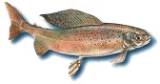
Arctic Grayling
The arctic grayling, with its spots and sail-like dorsal fin, is instantly recognized. The grayling lives in many streams and lakes. It's fun to catch, and its light flesh is tasty.
Northern Pike
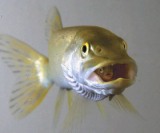
Long and aggressive, the northern pike makes a fearsome predator to Alaska's trout and salmon populations in Southcentral Alaska. But in the Minto Flats of the Interior, the pike has become a sought-after trophy.
Whitefish
Whitefish are the most common species north of the Alaska Range. In Alaska, broad whitefish occur throughout the freshwater drainages of the Bering Sea (including the Yukon and Kuskokwim rivers) and drainages of the Chukchi Sea and the Arctic Ocean. Whitefish in general are silver-colored with large scales, fleshy dorsal and adipose fins, no teeth, and a small fleshy appendage at the base of the pelvic fin called a pelvic axillary process.
Lingcod
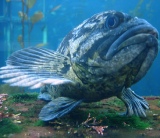
Lingcod, one of the ugliest fish in the ocean is also one of the tastiest . The lingcod can live 25 years and grow to well over 70 pounds. They're voracious eaters, sporting a large mouth and 18 sharp teeth.
Salmon Shark
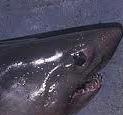
Salmon sharks take a bite out of Alaska's salmon runs, but they're not at the top of the food chain when fishing charter boats are in the area. Gulf of Alaska anglers have caught salmon sharks averaging from 250 to 400 pounds and sometimes weighing over 700 pounds.
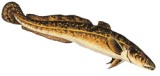
Burbot
The burbot got its name from the French word "bourbeter," which means "to wallow in mud." And although the burbot, sporting a single chin barbel, is called an ugly fish, its mild white flesh is considered quite tasty. The burbot is the only fresh-water cod in North America, living in cold waters north of 40 degrees latitude, according to the Alaska Department of Fish and Game.
|
|