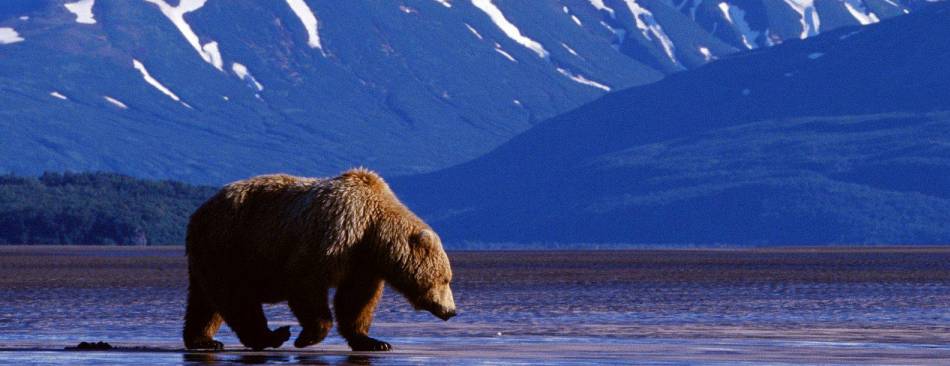
One thing that makes Alaska so special is that all three species of North American bears flourish here. There is a chance that you may be lucky enough to see a bear. But even if you don't, you will never be far from one, because Alaska is bear country. When you venture out in Alaska you are travelling in bear country.
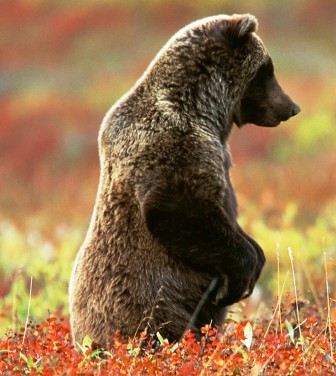
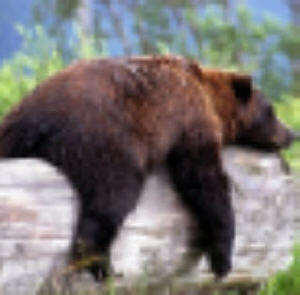
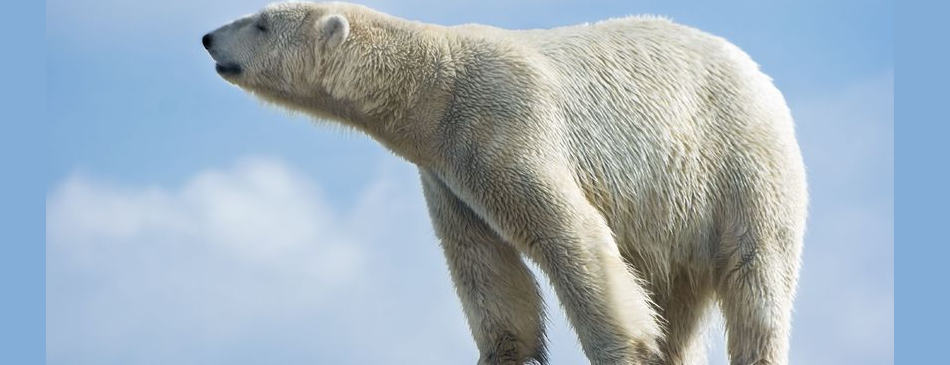
The brown bear resembles its close relatives the black bear and the polar bear.. Brown bears are usually larger than black bears, have a more prominent shoulder hump, less prominent ears, and longer, straighter claws. Polar bears are similar in size to coastal brown bears, but are more streamlined, lacking the hump. The varying shapes of these bears are adaptations to their particular life styles. Long claws are useful in digging roots or excavating small mammals, but are not efficient for climbing trees. The musculature and bone structure of the hump are adaptations for digging and for attaining bursts of speed necessary for capture of moose or caribou. Color is not a reliable key in differentiating these bears because black and brown bears have many color phases and polar bears may have stained fur. For example, black bear fur may be black, brown, reddish or even shades of grey and white, while brown bear colors range from dark brown through very light blond. Brown and grizzly bears are classified as the same species even though there are notable differences between them.
Brown bears are very adaptable and like humans, they consume a wide variety of foods. Common foods include salmon, berries, grasses, sedges, cow parsnip, ground squirrels, carrion, and roots. In many parts of Alaska, brown bears are capable predators of moose and caribou, especially newborns. Bears may also be attracted to human camps and homes by improperly stored food and garbage as well as domestic animals. Brown bears, also known as grizzlies, occur throughout Alaska except on islands south of Frederick Sound in southeast Alaska, west of Unimak in the Aleutian Chain, and Bering Sea islands. They also occur in Russia, northern China, northern Japan, Europe, western Canada, and in limited portions of the northwestern United States.
Cubs are born in the den
during January and February.
Twins are most common, but
litter sizes can range from 1 to
4. When the cubs emerge in June,
they may weigh up to 15 lbs and
they actively explore their
world under the constant
supervision of their mothers.
Mothers can be furiously
protective of cubs, however less
than half of the cubs survive.
Families typically stay together
for 2 or 3 years and after
separation female cubs tend to
stay near where they were raised
while males go farther afield.
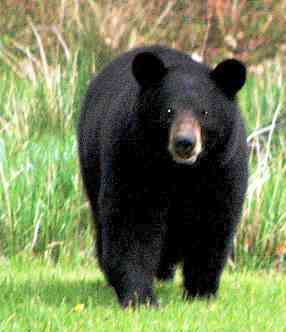
In the winter when food is unavailable or scarce, most brown bears enter dens and sleep through the winter. Although this is not true hibernation, their body temperatures, heart rate, and other metabolic rates are drastically reduced. While in the den they do not eat, drink, urinate or defecate. Pregnant females are usually the first to enter dens in the fall. These females, with their newborn cubs, are the last to exit dens. Adult males, on the other hand, enter dens later and emerge earlier than most other bears. In northern areas, bears may spend up to 8 months in dens, while in areas with relatively mild winters, such as Kodiak, some male bears stay active all winter. Brown bears have an exceptionally acute sense of smell, exceeding that of dogs. Contrary to popular belief, bears are not nearsighted. Their eyesight and hearing are comparable to humans. They can run in short bursts up to 40 mph and are excellent swimmers. By all indications, bears are extremely intelligent and most have individual personalities. Black bears are the most abundant and widely distributed of the three species of North American bears. An estimated 100,000 black bears inhabit Alaska. The black bear is the smallest of the North American bears. Adults stand about 29 inches at the shoulders and are about 60 inches from nose to tail. Males are larger than females, and weigh about 180-200 pounds in the spring. They are considerably lighter when they emerge from winter hibernation and may be about 20 percent heavier in the fall when they’re fat. Black bears can vary in color from jet black to white. Black is the color encountered most frequently across the state, but brown or cinnamon-colored black bears are sometimes seen in Southcentral Alaska and on the southeastern mainland. Cinnamon-colored black bears are also common in Alaska’s Interior. Some bluish-colored bears called glacier bears may be found in the Yakutat area and in other parts of Southeast Alaska. Black bears often have brown muzzles and some also have a patch of white hair on their chest.
|