

|
|
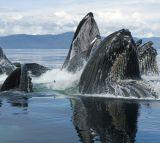
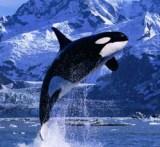
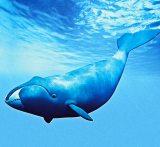
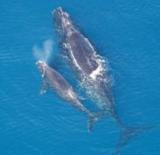
There are eight species of whales that frequent the cold and
icy waters of Alaska. The Beluga,
Humpback,
Gray, Orca,
Bowhead, Blue,
Right, and
Minke whales.
Blue whales are a member of the baleen family of whales, which
holds the distinction for being the group encompassing the
largest of the whale species.
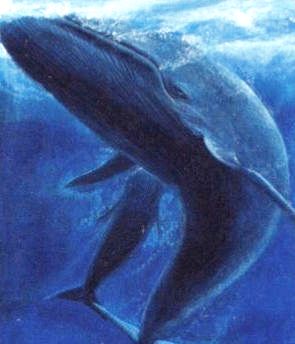
Everything about the blue whale is enormous. It is the largest
animal on earth, ever. A big blue whale can be 100 feet long and
weigh up to 150 tons. That's as large as a Boeing jet. Its heart
is as large as a small car. Fifty people could stand on its
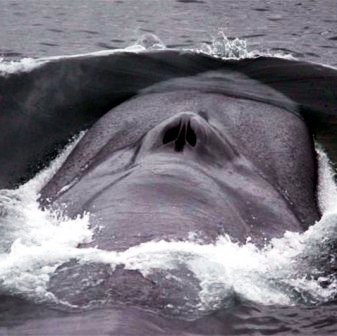
tongue. Its spout shoots up at least 30 feet when it surfaces
for air. The blue whale is the
largest animal inhabiting the earth. There are records of
individuals over 100 feet long, but 70-90 feet is probably
average. A good way to visualize their length is to remember
that they are about as long as three school buses. An average
weight for an adult is 200,000 to 300,000 pounds (100-150 tons).
Its heart alone is as large as a small car.
Blue whales get their name from their dark-blue coloring. Cold
water diatoms adhere to their skin and sometimes give their
bellies a yellowish tinge, giving the blue whale its nickname of
"sulfur bottom." Blue whales are long and streamlined. Their
dorsal fins are extremely small, and their pectoral flippers are
long and thin.
Blue whales migrate away from Alaska in the winter months to
warmer waters off Baja California where they mate and give birth
to their young. They are long lived, up to 90 years, with an
average lifespan expectancy of 35-40 years. Blue whales tend to
travel alone or in small pods of two or three. Fin whales, the
second largest of the whale species, often travels with Blue
whales..
Blue whales mate and calve in tropical-to-temperate waters
during winter months and feed in polar waters during summer
months. Even at birth, the blue whale is enormous, weighing as
much as an adult hippopotamus. The baby blue whale drinks
approximately 100 gallons of its mother’s fat rich milk every
day for the first seven months of its life. Blue whales in the northern hemisphere move north to
Arctic waters to feed.
The blue whale is the loudest whale on the planet. Its sounds
consist of trills, moans and pulses, which are short sounds that
repeat at regular intervals. Its low-frequency whistles carry
for hundreds of miles underwater and are often 40 to 50 decibels
louder than a jumbo jet. Humans cannot hear these loud, low
frequency sounds with out the aid of special equipment to raise
the pitch to a level we can hear. The blue whale sounds can be
detected over 700 miles, which means that they may well be a
form of communication. The sounds may enable them to find food
and a mate.
Blue whales do not have any natural predators due to their large size. The
calves can be vulnerable to attacks by killer whales. Blue whales had reached
the point of extinction by the 1960’s due to whaling. Currently the
International Whaling Commission and the U.S. ban the hunting of the blue whale.
Humans can be a threat by modifying the whale’s habitat, vessel collisions and
entanglement in fishing gear. Guidelines are available to whale watching boats
so that whales remain unharmed and whale watchers enjoy the exciting opportunity
to see these giant animals in their awe-inspiring environment.
Blue whales feed almost exclusively on tiny, shrimp-like
crustaceans called krill, which it filters from the ocean with
modified teeth called baleen. They can swallow one hundred
pounds of krill in one gulp. They will eat four tons of food
each day. They feed at depths of less than 325 feet where the
light can penetrate which increases the production of krill.
The average swimming speed is 13 miles per hour with top
speeds of 30 miles per hour if frightened. Blue whales can dive at
depths up to 1640 feet. That dive usually lasts for 10-20
minutes. They blow 8-10 times in between dives. The spout can
reach nearly 30 feet in height.
|